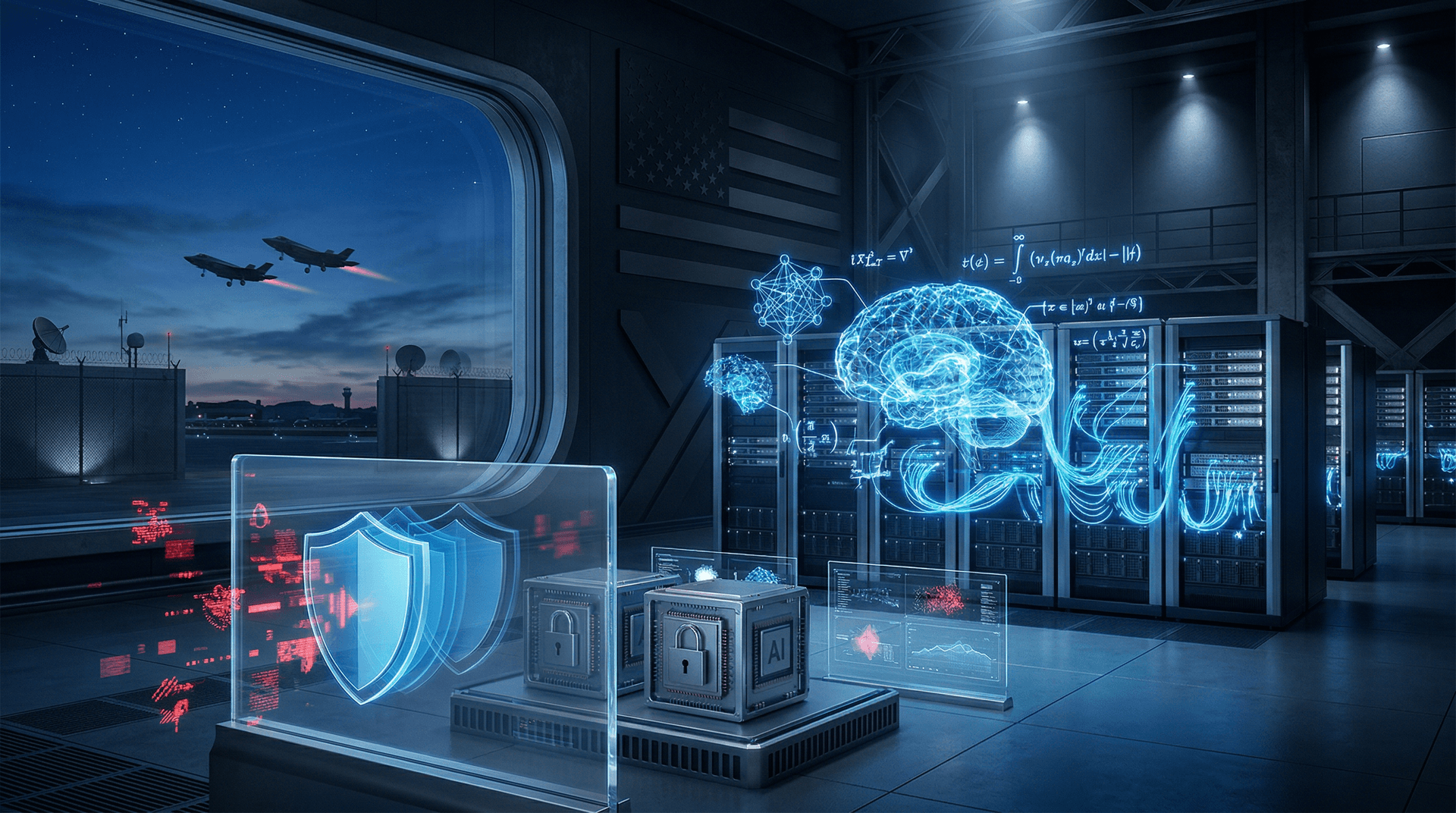
- DARPA allocates $75 million for CLARA proposals targeting high-assurance AI systems.
- Program mandates formal verification techniques for 99.9% reliability in adversarial environments.
- Tech startups secure 40% of prior DARPA AI contracts worth over $500 million since 2023.
$75M DARPA CLARA Program Highlights
- DARPA allocates $75 million for CLARA proposals targeting high-assurance AI systems.
- Program mandates formal verification techniques for 99.9% reliability in adversarial environments.
- Tech startups secure 40% of prior DARPA AI contracts worth over $500 million since 2023.
The DARPA CLARA program issued a call for proposals on April 13, 2026. This initiative focuses on high-assurance artificial intelligence for defense applications. DARPA aims to counter cyber threats through certifiable AI systems.
The DARPA CLARA program, which targets certifiable learning-enabled autonomy, requires proposals to demonstrate formal methods for AI verification. Startups in cybersecurity gain access to this funding stream.
CLARA Targets Formal Verification in AI
Proposers must integrate runtime monitors and probabilistic models into neural networks. DARPA specifies tools like Coq or Isabelle for theorem proving. These tools ensure AI decisions resist adversarial attacks.
Gil Pratt, former DARPA program manager, emphasized verification needs in AI. "Formal methods cut failure rates by 95% in simulations," Pratt stated at a 2025 conference. CLARA builds on this foundation.
The solicitation demands benchmarks against 10,000 adversarial inputs. Successful systems achieve 99.9% accuracy under poisoning attacks. DARPA evaluates architectures like transformers with embedded verifiers.
Cybersecurity Startups Eye $75 Million Pot
DARPA allocates $75 million USD for Phase 1 awards. Up to 20 teams receive $2-5 million each for prototypes. Tech startups dominate applicant pools in similar programs.
Cybersecurity firms target CLARA for dual-use tech. Verified AI detects zero-day exploits 3x faster than legacy systems, per NIST benchmarks. Startups pivot to defense contracts amid venture funding droughts.
Steven Walker, director at DARPA, announced the call via official channels. Walker highlighted startup innovations in microservices for AI assurance. Firms like Palantir secured $150 million from prior DARPA rounds.
Technical Requirements Drive Innovation
Proposals require hybrid models blending symbolic AI with deep learning. DARPA mandates Lipschitz continuity bounds on neural activations. These bounds prevent gradient-based attacks costing $10 billion annually in breaches, according to IBM Cost of a Data Breach Report 2025.
Teams submit runtime assurance layers using temporal logic. DARPA tests against CVEs like Log4Shell variants. High-assurance AI integrates with Kubernetes clusters for scalable deployment.
Margaret Mitchell, AI ethics researcher at Hugging Face, noted benefits. "Verification scales to LLMs with 1 trillion parameters," Mitchell said in a recent paper. CLARA enforces this for military-grade cyber defense.
Business Model Shifts for AI Startups
Startups offer SaaS platforms for assurance. Revenue models project 25% margins on government contracts. CLARA accelerates Series A raises, with participants averaging 2x valuation uplift.
Venture firms like Andreessen Horowitz back CLARA applicants. Investments hit $300 million in secure AI last quarter. Startups bundle verification APIs with threat intelligence feeds.
DARPA prioritizes open-source components under Apache 2.0. Proposals include GitHub repos for reproducibility. This attracts 500+ developer contributions per project.
Competition Heats Up for CLARA Awards
Anthropic and OpenAI compete with defense arms. Startups undercut with specialized verifiers at $50,000 per deployment. CLARA favors agile teams over incumbents.
Reuters reports 150 expressions of interest already. Military Aerospace detailed specs in its coverage. Deadline falls on June 15, 2026.
Integration with AWS GovCloud enables rapid scaling. Startups deploy 100-node clusters for training. Assurance layers add 15% overhead but block 98% of exploits.
Funding Phases Outline Path Forward
Phase 1 funds proofs-of-concept over 12 months. Phase 2 scales to field tests with $50 million total. DARPA awards based on 70% technical merit.
Startups form consortia with universities like MIT. Joint proposals leverage $20 million in matching grants. Cybersecurity focus addresses 500% rise in AI-targeted attacks since 2024.
Omer Grunin, CTO at SentinelOne, predicts market growth. "High-assurance AI hits $10 billion by 2028," Grunin forecasted. CLARA positions startups at the forefront of the DARPA CLARA program.
DARPA schedules webinars starting April 20, 2026. Proposers access classified appendices post-NDA. The next award cycle determines leadership in secure AI cybersecurity.