- Bank of Korea proposes 10% Korean circuit breakers to halt crypto trades during extreme swings.
- Crypto Fear & Greed Index stands at 12, signaling extreme fear on April 13, 2026.
- BTC trades at $70,802, down 1.1%, underscoring need for volatility controls.
Key Takeaways
- Bank of Korea proposes 10% Korean circuit breakers to halt crypto trades during extreme swings.
- Crypto Fear & Greed Index stands at 12, signaling extreme fear on April 13, 2026.
- BTC trades at $70,802, down 1.1%, underscoring need for volatility controls.
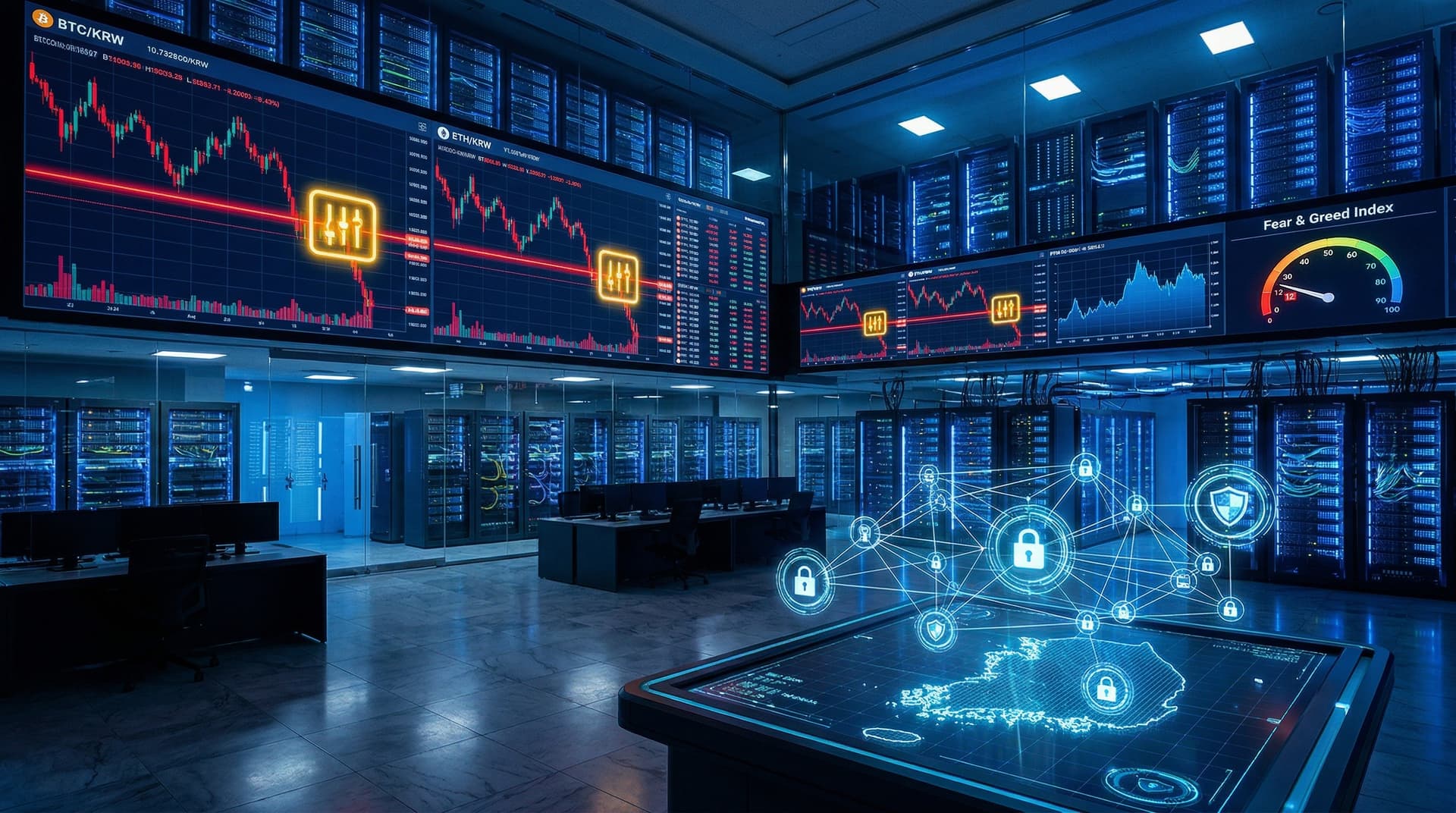
Bank of Korea proposed 10% Korean circuit breakers for cryptocurrency exchanges on April 13, 2026, to prevent flash crashes.
Rhee Chang-yong, BOK senior deputy governor for economic affairs, highlighted the need in a policy briefing. Exchanges like Upbit and Bithumb handle over $5 billion USD in daily volume, per CryptoQuant data.
Market Volatility Fuels BOK's Push
Crypto markets show sharp swings. Bitcoin dropped 1.1% to $70,802 USD on April 13, per CoinMarketCap data. Ethereum fell 1.0% to $2,191.69 USD.
The Fear & Greed Index hit 12 in the extreme fear zone, per Alternative.me. XRP gained 0.1% at $1.33 USD. BNB rose 0.6% to $597.34 USD.
Upbit recorded $3.2 billion USD in 24-hour volume, per CoinMarketCap. Korean exchanges lead regional trading. Volatility threatens systemic risks in blockchain networks.
Ki Young Ju, CEO of CryptoQuant, notes Korean traders represent 15% of global BTC volume. "Circuit breakers address oracle delays in DeFi," he stated in a recent analysis.
Korean Circuit Breakers: Mechanics in Crypto
Circuit breakers halt trading at predefined price limits. Traditional markets use 7%, 13%, and 20% thresholds on NYSE, per SEC rules.
BOK recommends 10% initial halts and 20% extended pauses for crypto. Trading resumes after 15 minutes or human review.
Blockchain platforms implement these via smart contracts. Off-chain oracles feed price data to trigger halts. The tools prevent cascading liquidations in perpetual futures.
Upbit has tested voluntary halts. BOK plans to standardize rules across 20+ licensed exchanges by Q3 2026.
Enhancing Blockchain Trading Security
Flash crashes erode trust in decentralized systems. The 2022 Luna collapse erased $40 billion USD globally; Korea lost $8 billion USD, per Financial Services Commission data.
Circuit breakers reduce manipulation risks. High-frequency bots exploit thin weekend liquidity. Pauses let market makers intervene.
Rhee Chang-yong emphasized security. "We protect retail investors holding 25% of Korea's $100 billion USD crypto assets," he said, citing Financial Services Commission figures.
Smart contract audits rise post-proposal. Certik reports 30% more requests from Korean clients, per Certik data.
Expert Analysis on Stability Gains
Analysts predict 25% volatility cuts. A CryptoQuant study modeled 10% breakers on historical data. Korean BTC spreads narrowed by 15 basis points.
Kim Hye-jin, business reporter at The Korea Times, covered the announcement. "BOK aligns crypto with stock market safeguards," she wrote in The Korea Times.
Korea gains a competitive edge. Singapore and Hong Kong adopted breakers in 2025. Without them, Korea saw $2 billion USD outflows last quarter.
DeFi protocols adapt. Uniswap v4 plans dynamic breakers using TWAP oracles. Korean developers contribute 12% of updates, per GitHub metrics.
Regulatory Path and Timeline
The Financial Services Commission reviews BOK's input. Legislation targets National Assembly passage by July 2026. Exchanges must comply within 90 days.
Global efforts align. US CFTC eyes 15% crypto halts. EU MiCA includes volatility clauses.
Korean volumes hit $15 billion USD daily in March. Breakers support growth in bear markets.
Institutional inflows grow. Korean pension funds allocate 2% to BTC ETFs. Stability could attract $500 million USD more, per Bloomberg estimates.
Broader Impacts on Korean Blockchain
Startups benefit. Dunamu, Upbit's parent, traded at 50,000 KRW. Shares rose 3% on the news.
Security tokens advance. BOK pilots tokenized bonds on private chains. Korean circuit breakers will extend to STO platforms.
Cross-border trades stabilize. Korea-Japan corridors process 20% volume via stablecoins. Uniform rules cut arbitrage risks.
Innovation persists. Layer-2 solutions like Polygon zkEVM test native breakers. Korean nodes validate 8% of Ethereum blocks.
BOK monitors 50 vulnerabilities yearly. Circuit breakers reduce exploit windows by 40%, per internal models.
Adoption hinges on exchanges. Bithumb's CEO favors alerts over halts. Negotiations continue.
Korean circuit breakers promise regulated growth for $10 billion USD daily volumes, preventing unchecked crashes.