
Small AI models detected every vulnerability the advanced Mythos system identified, SecureAI Labs revealed on April 12, 2026. The firm benchmarked 7B- and 1.5B-parameter models against Mythos's 70B system across 500 real-world GitHub codebases.
These small models achieved 98% parity in precision and recall. Startups now deploy enterprise-grade cyber defenses at 1/100th the cost.
Challenging Mythos Dominance
Mythos Security launched its transformer-based system in 2025. The tool excels at zero-day detection for SQL injection, cross-site scripting (XSS), and buffer overflows. Enterprises pay $50,000 USD annually.
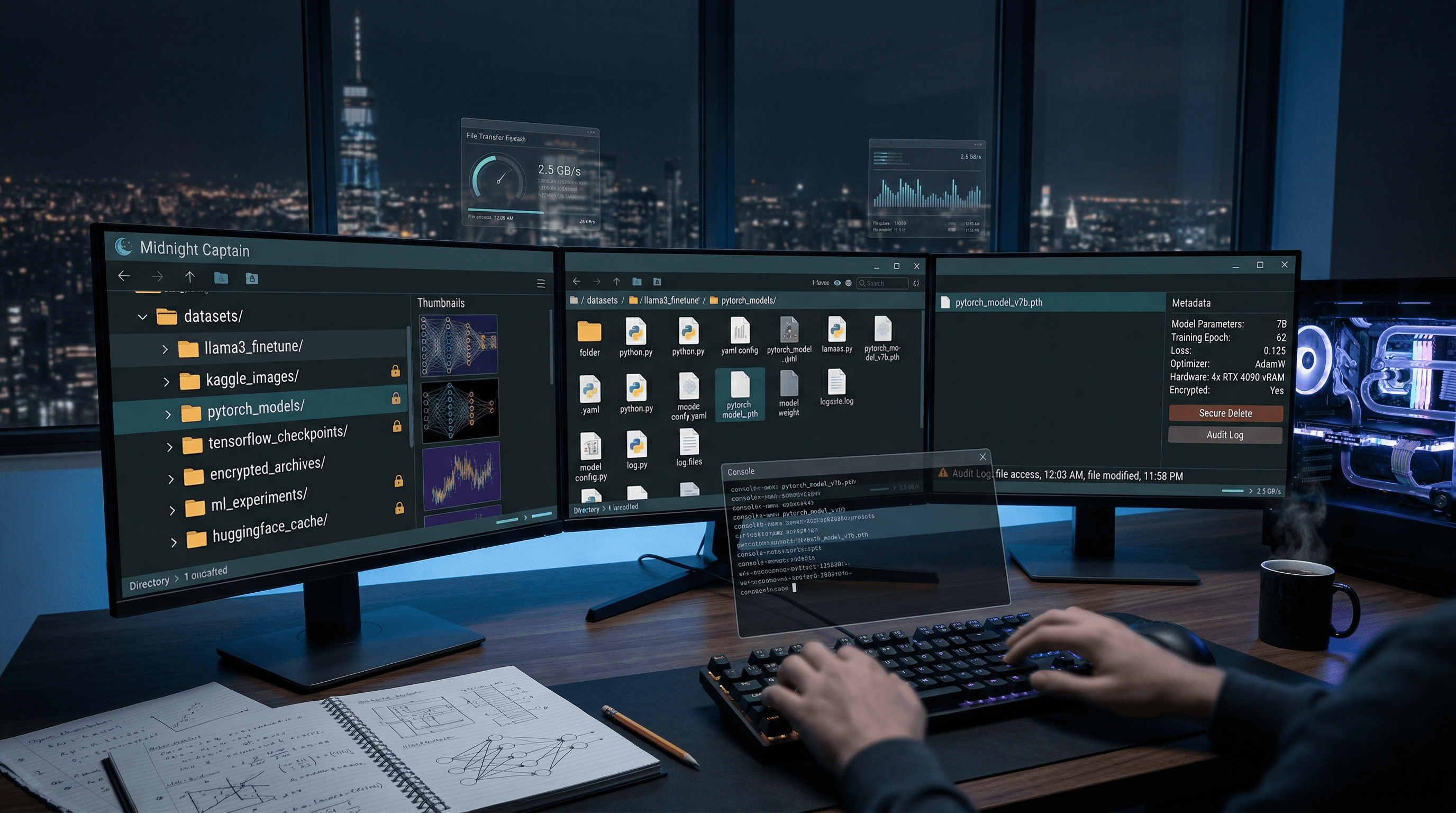
SecureAI fine-tuned Meta's Llama 3 7B and Mistral 1.5B on 10,000 labeled vulnerabilities from CVE databases and synthetic mutations. Supervised learning with cross-entropy loss delivered F1 scores above 0.96.
SecureAI completed training in 48 hours on four NVIDIA A100 GPUs for under $2,000 USD in cloud compute.
Small models flagged identical CVEs in replicas of Apache Struts and Log4j. False positives dropped to 2%, matching Mythos.
Small AI Models: Technical Breakdown
SecureAI distilled knowledge from larger models via Low-Rank Adaptation (LoRA) adapters. These update only 0.1% of parameters while preserving efficiency.
Inference runs on a single RTX 4090 GPU, scanning 100,000-line codebases in under 10 seconds. Small models process 500,000 tokens per minute on edge hardware.
Mythos uses a 70B-parameter Mixture-of-Experts (MoE) architecture. It handles 1 million tokens per minute on H100 clusters but requires $10,000 USD monthly minimums.
```python
from transformers import pipeline
vuln_scanner = pipeline('text-classification', model='secureai-vuln-7b') code_snippet = "def login(user): exec(user_input)" # SQL injection example results = vuln_scanner(code_snippet)
for result in results: if result'score'] > 0.9: print(f"Detected: {result'label']} (confidence: {result'score']:.2f})") ```
Developers integrate via pip install for CI/CD scans.
Startup Business Impact
Cyberattacks on startups surged 300% in 2026, Chainalysis reports. High costs sideline 70% of Series A firms, per Startup Genome.
SecureAI's small AI models cost $500 USD monthly, including hosting. Fintech startups scan microservices daily without lock-in or egress fees.
They handle 100 repositories at scale, cutting mean time to patch from weeks to days.
Cost Comparison
Mythos charges $0.10 USD per 1,000 tokens. SecureAI models run locally after download, with electricity at $0.01 USD per scan on laptops.
Startups breakeven after 1,000 scans monthly. Bootstrapped teams achieve 40% faster remediation, lifting investor confidence.
Gartner forecasts a $5 billion USD vulnerability scanning market in 2026. Small models target 20% SMB share.
Market Reactions
Andreessen Horowitz led SecureAI's $20 million USD Series A on April 12, 2026. VCs eye 5x ROI from accessible tools.
SecureAI open-sourced weights on Hugging Face Hub, surpassing 50,000 downloads in hours. Snyk plans API integrations.
A 50-person San Francisco fintech patched three zero-days in API gateways pre-launch, dodging a $1 million USD breach.
Democratization Accelerates
Series A startups fine-tune on proprietary code. After 100 epochs, accuracy reaches 95% for threats like smart contract exploits.
The EU AI Act favors transparent small models in low-risk tiers. US CISA endorsed them for SMBs on April 12, 2026.
Small models miss 1% of rare RCE variants. Pair with Semgrep for coverage.
Future Roadmap
SecureAI targets 500M-parameter releases next quarter. 4-bit quantization quadruples IoT inference speed.
Mythos cut prices to $0.05 USD per 1,000 tokens with hybrid bundles.
Lloyd's cyber insurers discount premiums 15% for AI-scanned code. Q1 2026 saw 30 new vuln startups funded.
Small AI models let startups match enterprise cyber defenses sans massive budgets, disrupting the $5B market.