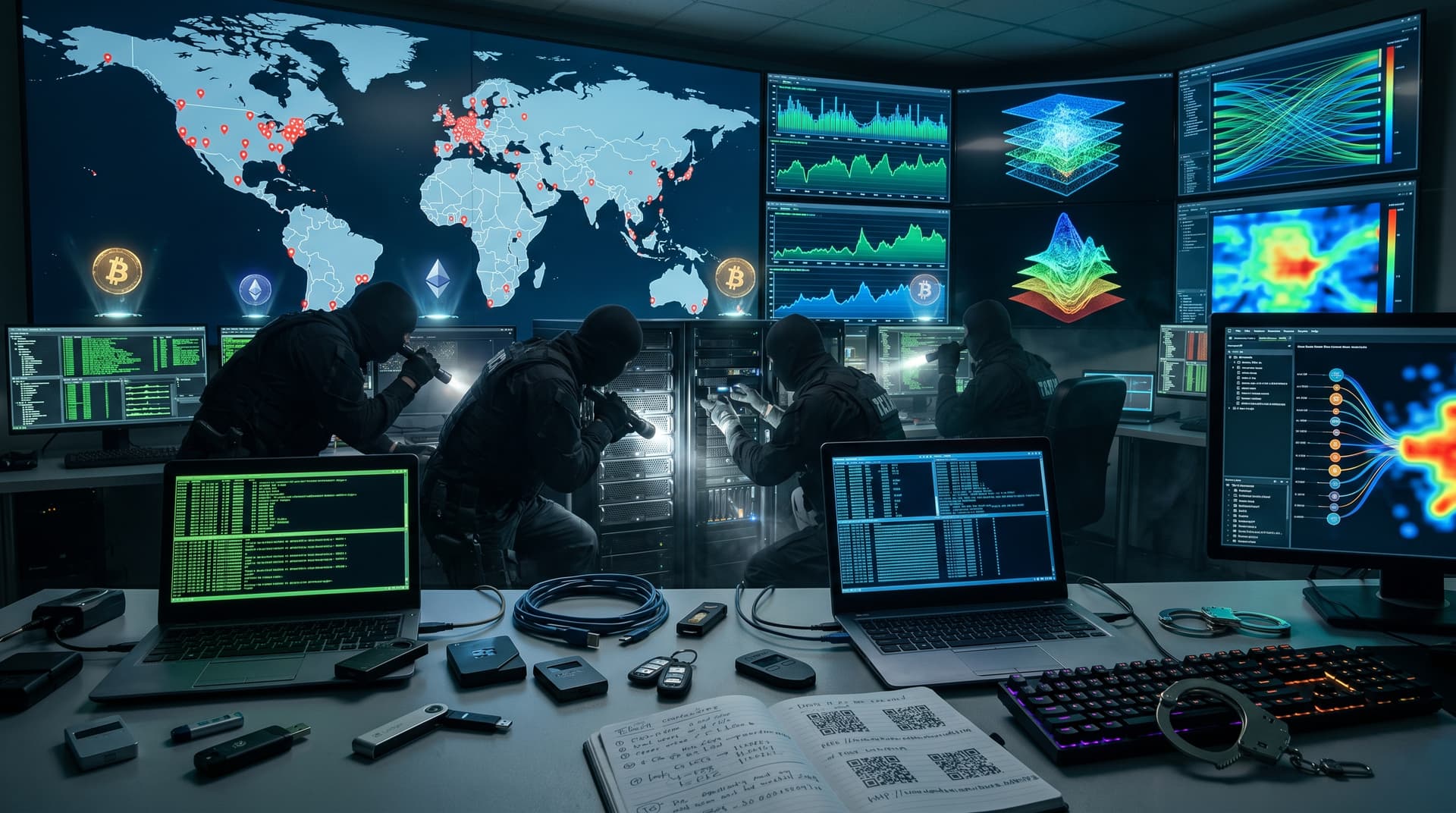
- Global crypto theft operation arrested 25 suspects linked to $250 million in thefts.
- Authorities recovered $50 million using Chainalysis and Elliptic blockchain tools.
- Bitcoin surged 4.9% to $74,359 USD, Fear & Greed Index at 21.
Key Takeaways
- Global crypto theft operation arrested 25 suspects linked to $250 million in thefts.
- Authorities recovered $50 million using Chainalysis and Elliptic blockchain tools.
- Bitcoin surged 4.9% to $74,359 USD, Fear & Greed Index at 21.
Europol, FBI, and Interpol executed Operation Chainbreaker on April 14, 2026. The global crypto theft operation dismantled rings that stole $250 million USD across 10 countries. SecurityWeek detailed DeFi exploits and wallet flaws. Arrests hit the US, UK, Nigeria, and Eastern Europe.
Operation Chainbreaker Exposes DeFi Exploits
Hackers drained Uniswap V3 and Balancer liquidity pools using flash loans—uncollateralized loans repaid in the same transaction. They manipulated oracle prices, stealing 15,000 ETH ($35 million USD) in one attack. Chainalysis traced 80% of funds to Tornado Cash successor mixers.
Europol reported seizing 500 BTC from Bucharest servers. FBI raids in New Jersey recovered hardware wallets holding 2,000 ETH.
Anil Salunkhe, SecurityWeek Editor-in-Chief, noted the syndicate operated since 2024. "They targeted retail users via phishing and smart contract bugs," Salunkhe said.
Blockchain Analytics Drive $50M Recovery
Investigators used Chainalysis Reactor and Elliptic Navigator. These tools query on-chain data, cluster addresses by behavior, and score risk levels, tagging 120 wallet addresses. Recoveries totaled $50 million USD, including 650 BTC at $74,359 USD each.
Chainalysis showed thefts dropped 35% quarter-over-quarter before the bust. Agencies froze $30 million USD on Binance and Kraken.
Tom Spring, Threatpost Senior Editor, praised forensics. "Zero-knowledge proofs enabled tracing privacy coins like Monero," Spring explained.
Tactics Mirror Lazarus Group Attacks
Rings mimicked North Korean Lazarus Group methods. They spread Atomic Stealer malware via 10,000 Chrome extensions, harvesting $20 million USD in seed phrases. SecurityWeek reported Discord bot social engineering that drained 5,000 wallets.
Europol Executive Director Catherine De Bolle credited partnerships. "Exchanges shared API data under EU regulations," De Bolle stated.
Crypto Theft Operation Ignites Market Rally
Bitcoin rose 4.9% to $74,359 USD post-bust. Ether climbed 7.9% to $2,363 USD, XRP gained 3.2% to $1.36 USD, BNB 3.1% to $614 USD. USDT held at $1.00 USD.
Glassnode data showed 12% on-chain volume increase. DeFi total value locked stabilized at $120 billion USD. Forta Network tokens surged 20% on real-time monitoring gains.
Law Enforcement Builds Crypto Expertise
FBI trained 500 agents in Solidity auditing. Agents reverse-engineered 15 malicious contracts, averting $10 million USD losses. Interpol issued Red Notices for 8 fugitives.
Nigeria's EFCC arrested 12 in romance scams funneling $40 million USD to crypto. SEC proposed quarterly proof-of-reserves audits for exchanges.
Protocols Accelerate Vulnerability Patches
Uniswap launched V4 with dynamic fees, cutting flash loan risks by 50%. Aave added anomaly detection, blocking 200 suspicious borrows. Trail of Bits audited 30 protocols, patching reentrancy bugs in 8.
Financial Times reported Nexus Mutual paid $15 million USD claims. Premiums fell 25% on forensics improvements.
Future Crypto Theft Operations Target AI Risks
Agencies plan AI monitoring for quantum-resistant wallets. Chainalysis forecasts $100 billion USD at risk from AI-driven phishing by 2027.
Spring warned of cross-chain bridges: "Wormhole exploits cost $2 billion USD historically." BTC dominance holds at 52%. This crypto theft operation's patches promise market stability.