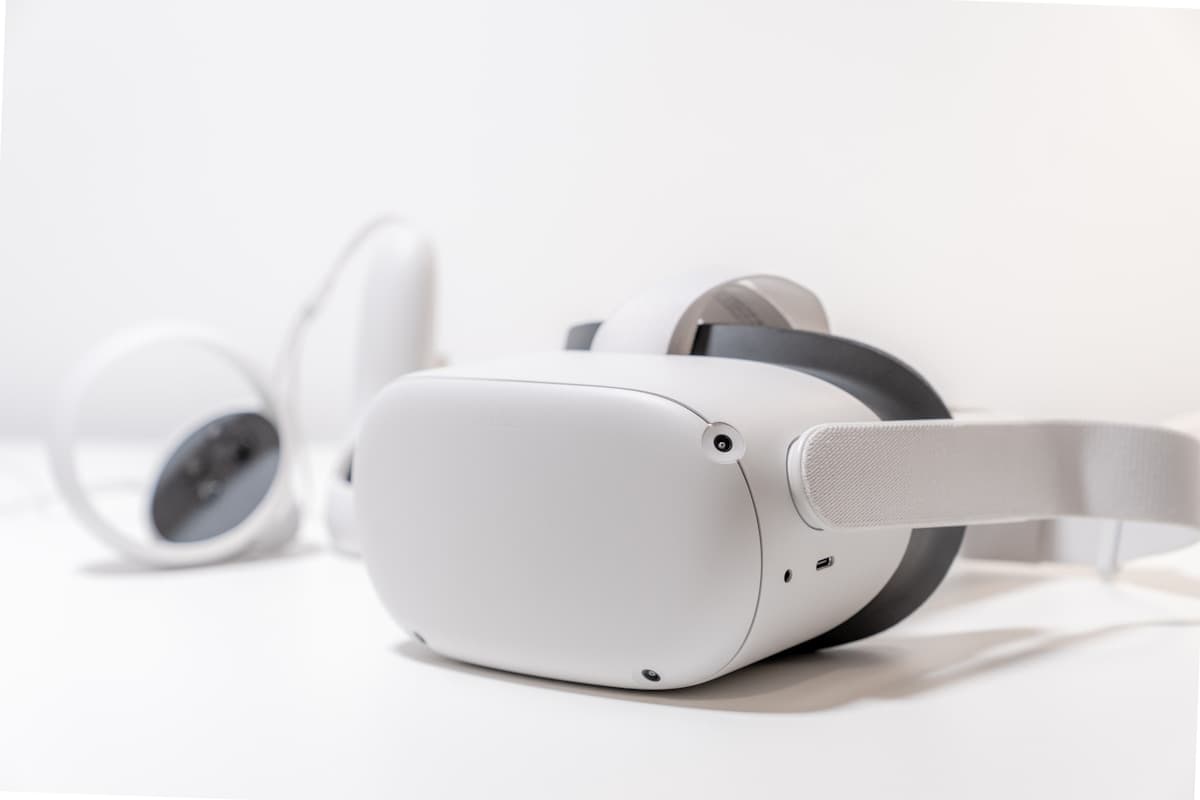
Apple has announced the Vision Pro 2, a significantly updated version of its spatial computing headset that addresses the two biggest criticisms of the original: price and comfort. At $1,999, the new model costs exactly half of its predecessor launch price, while delivering improved display quality, longer battery life, and a redesigned form factor that is 30% lighter.
The most notable hardware improvement is an adaptive optics system that can automatically adjust for common vision prescriptions, eliminating the need for separate Zeiss optical inserts that added $149-199 to the cost of the original Vision Pro. Users simply complete an eye scan during setup, and the headset motorized lens elements adjust to match their prescription. The system supports corrections from -6.0 to +4.0 diopters for both nearsightedness and farsightedness.
Apple has also significantly improved the comfort of the device. The Vision Pro 2 weighs 450 grams compared to the original 650 grams, achieved through a new carbon fiber frame and a redesigned battery architecture that places more of the weight at the back of the head. Apple claims the new design allows comfortable use for up to four hours, compared to roughly 90 minutes for most users of the first generation.
On the software side, Apple announced that the visionOS App Store now features over 10,000 native spatial computing applications, up from just 1,500 at the original launch. Key new titles include a spatial version of Microsoft Office, immersive fitness apps from Peloton and Nike, and a growing library of spatial video content from Disney Plus, Netflix, and YouTube. Apple also demonstrated new enterprise features including virtual whiteboarding and spatial CAD tools.
Analysts are cautiously optimistic about the updated device. Ming-Chi Kuo of TF International Securities estimates Apple could sell 3-4 million Vision Pro 2 units in the first year, compared to roughly 500,000 units of the original model. The lower price point and improved comfort remove the two biggest barriers to adoption, though the device still faces competition from Meta Quest 3, which offers a less sophisticated but far cheaper entry into mixed reality at $499.